Multi-functional Rescue Truck
is equipped with all kinds of fire-fighting and rescue equipment,
fireman's special protective equipment, fire-fighting and dismantling
tools and fire source detector. It is a special fire truck that
undertakes rescue tasks.
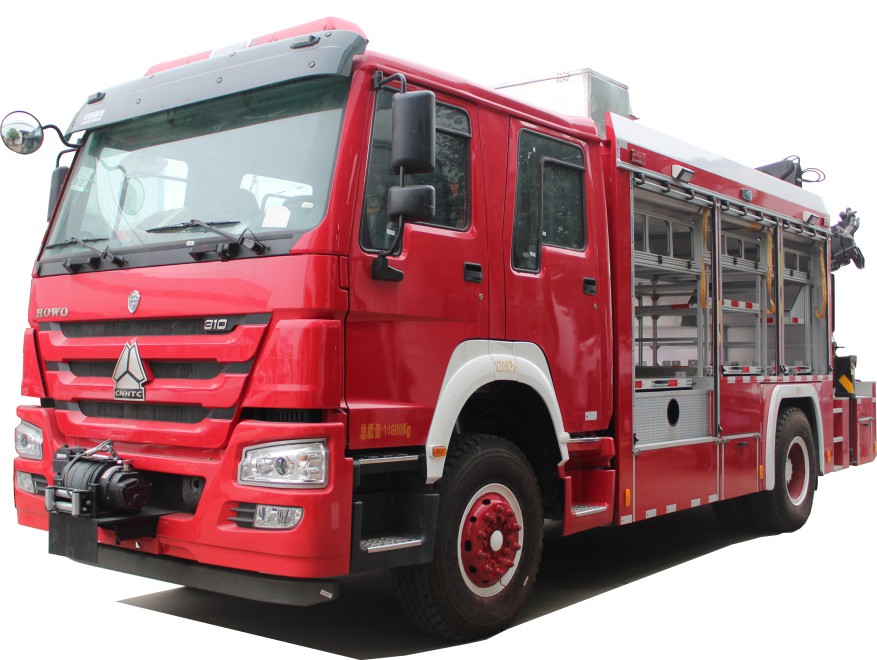
The structural composition of rescue vehicles includes the chassis, upper body (with rescue equipment), power extractor and transmission device, generator (shaft belt type or independent generator set), winch (hydraulic or electric), truck crane (generally folding arm type, in the rear of the body), lifting lighting system, electrical system.
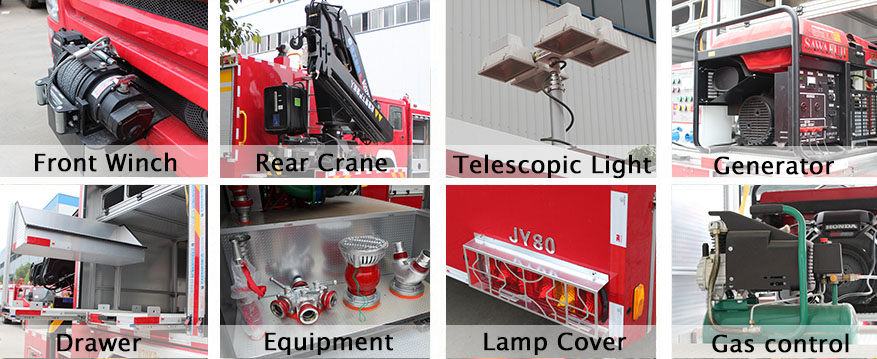
The multi-functional rescue truck has lifting, self-rescue/traction, obstacle clearance, power generation, lighting and other functions, can be equipped with a large number of demolition, detection and inspection, plugging, protection and other types of fire equipment or tools;The interior of the vehicle equipment box adopts aluminum alloy profile adjustable modular structure, reasonable space layout, safe and convenient tool placement, belongs to the special service fire truck, widely used in fire fighting forces, to cope with various natural disasters, emergencies and rescue, rescue and other fields.
Related products: ISUZU fire fighting truck, water tank fire truck, Dong Feng fire fighting truck
The structural composition of rescue vehicles includes the chassis, upper body (with rescue equipment), power extractor and transmission device, generator (shaft belt type or independent generator set), winch (hydraulic or electric), truck crane (generally folding arm type, in the rear of the body), lifting lighting system, electrical system.
The multi-functional rescue truck has lifting, self-rescue/traction, obstacle clearance, power generation, lighting and other functions, can be equipped with a large number of demolition, detection and inspection, plugging, protection and other types of fire equipment or tools;The interior of the vehicle equipment box adopts aluminum alloy profile adjustable modular structure, reasonable space layout, safe and convenient tool placement, belongs to the special service fire truck, widely used in fire fighting forces, to cope with various natural disasters, emergencies and rescue, rescue and other fields.
Related products: ISUZU fire fighting truck, water tank fire truck, Dong Feng fire fighting truck
评论
发表评论